Summertime is everyone's favorite time of year, but you can have too much of a good thing - or at least your plants can! Heat stress happens when plants become too hot for too long, and the plant starts to suffer irreversible damage to soft tissues such as leaves and young shoots.
Typically, plants have a number of mechanisms built into their biology to deal with intense heat, but sometimes - especially during an extra-hot summer - they just can't keep up so we've put together a guide on how to deal with heat stress in your garden!
Heat Stress and Potted Plants
Caring for potted plants is by far the most common circumstance in which plants experience heat stress and it can be a real challenge for home growers to manage.
Pots can be useful tools for holding over bareroot plants until fall, but they come with some challenges that the grower should be aware of when it comes to heat stress.
Heat Gain
Pots are hot and that's a fact! A black pot, in full sun, can gain up to 9°F per hour - and in very hot conditions reach temperatures of upwards of 125°F - well beyond the tissue death threshold for many trees and bushes!
When holding over plants in pots it is critically important to keep them in areas shielded from the sun and with good water access, such as the eastern side of your home or under a large tree.
Limited Size
Another hurdle with container growing is the limited space a pot has for holding water in the soil. When planted in pots, trees and bushes will only be able to expand their root systems to the edge of the pots and only access the moisture available in that soil.
Early on that's going to be just fine, but keep in mind that over time those roots will grow and displace the soil - which reduces available space to hold water, combat dehydration, and avoid tissue damage.
Pot Protection Options
If you absolutely must hold your plants over in pots there are some things to remember:
Pots are movable. Easily the biggest advantage of pots is that they are mobile and able to be relocated out of direct sunlight and off of hot surfaces like patios and blacktop.
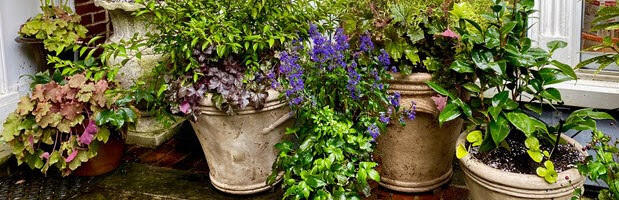
Choose light colored pot. In addition to being more aesthetically pleasing and varied in design, lighter colored pots made of resin or wood have significantly less heat gain than black plastic or clay pots.
If you cannot relocate your pots to a cooler area for the summer you can arrange them to shield each other, or even plant a companion plant, like trailing petunias, to shade the soil and sunward side of your pots. It's pretty too!
Deep saucers can be used to create a reservoir of water to keep soils moist and for your potted plants to draw from in-between waterings.
Planting in Raised Beds
Raised beds are also hotter in the summer than your typical in-ground planting by virtue of the soil being lifted above the cooling influence of the earth. Fortunately, raised beds to allow the root systems of our trees and bushes to extend further down and out than pots do. Raised beds cool off in the evening, but that extra heat may mean a need for extra irrigation or mulch during the hottest periods of the year.
What Does Heat Stress Look Like?
Fortunately, heat stress is a process in plants and there are several stages that your trees will go through to communicate more or less how stressed they've become and in how much need of extra cooling they are.
Wilting
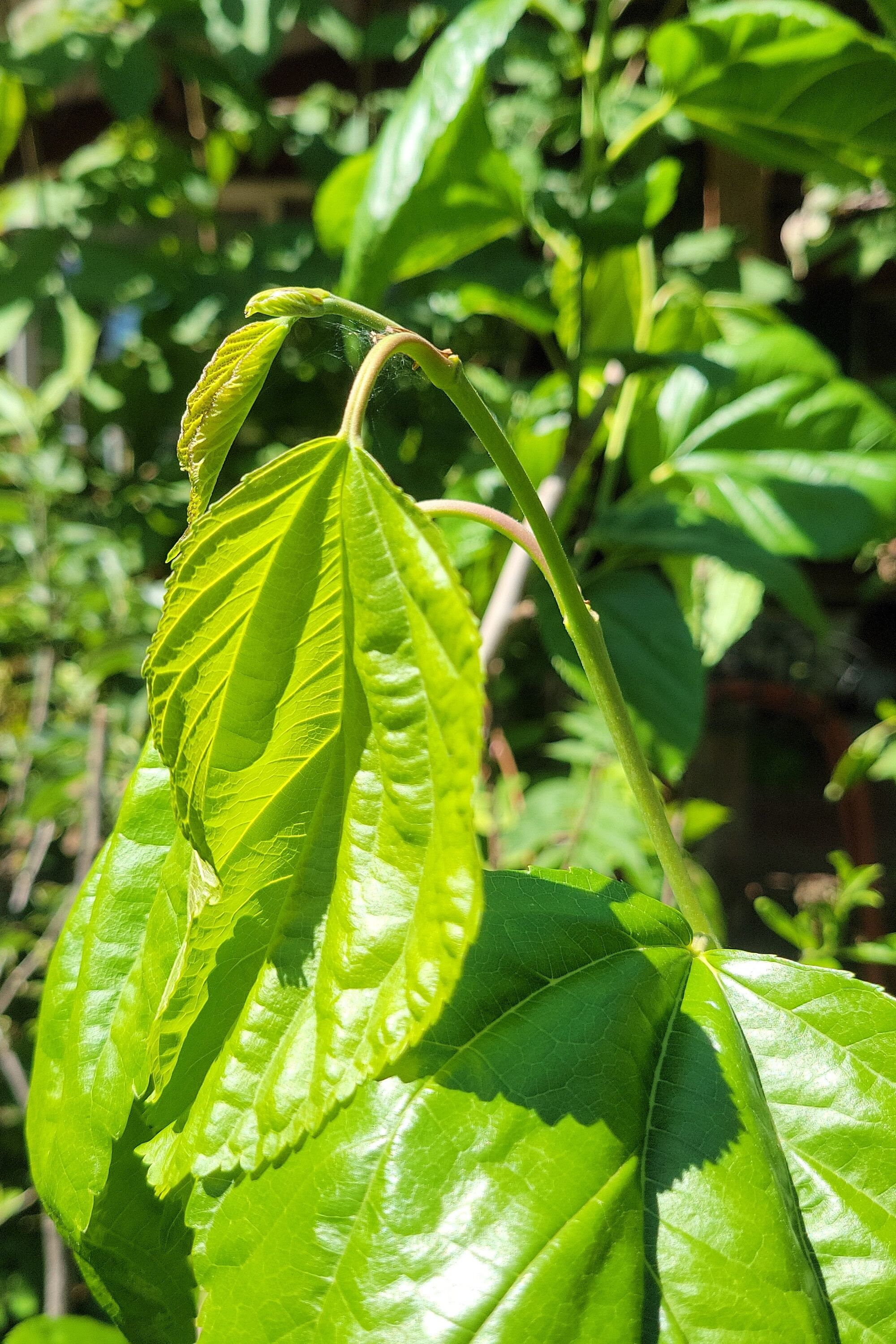
Wilting is the first major symptom of excessive water loss and heat loading in aplant. Not all wilting is bad and is often merely the result of the leaves transpiring water faster than the roots can absorb it. Left unchecked, however, the leaves will progress to senescence and start losing chlorophyll.
Brown Out
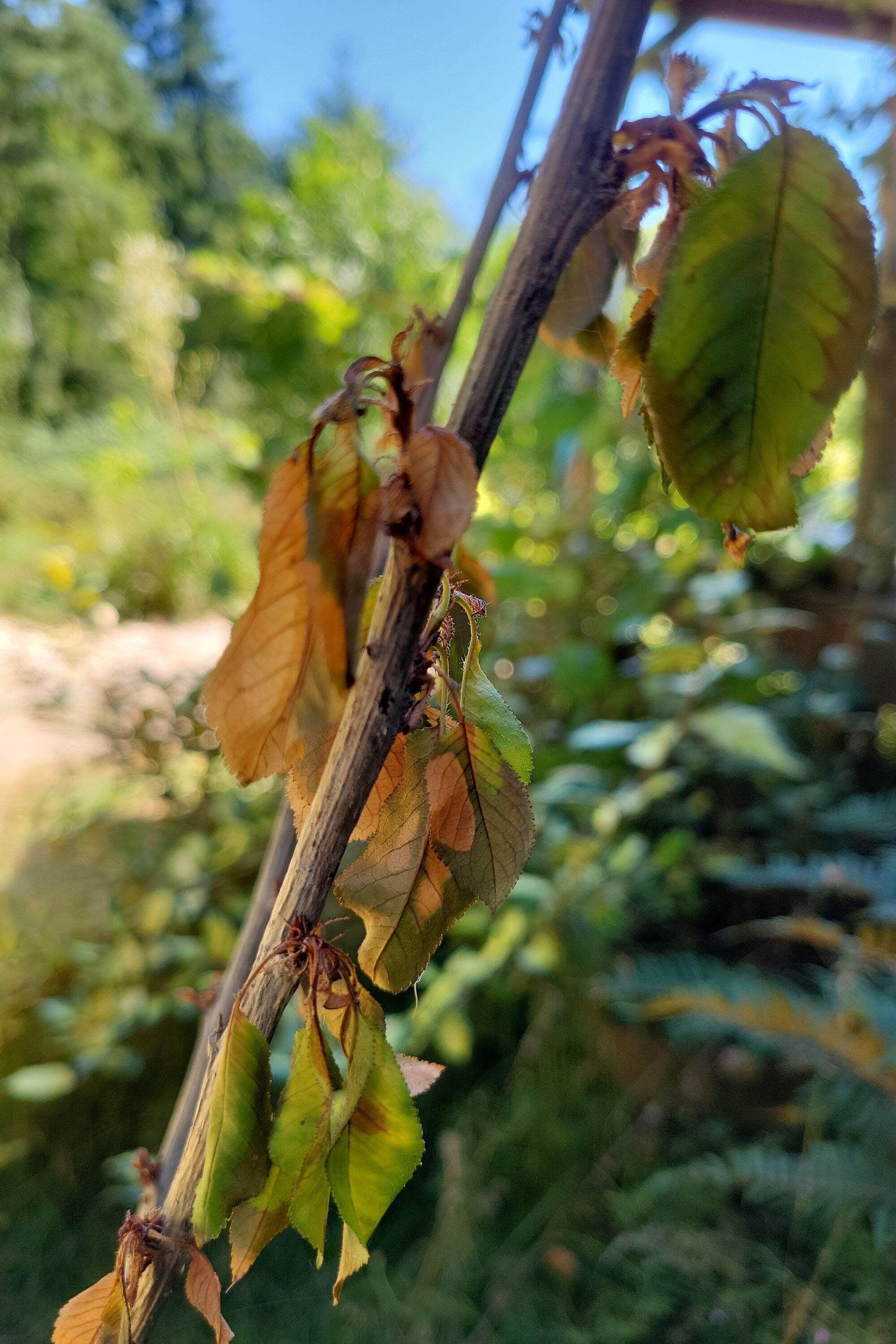
Unattended heat stress will signal the plant to stop making chlorophyll, which causes color changes in the leaves, and eventually leads to brown-out. Once brown, leaf tissues cannot be repaired and chlorophyll cannot be replenished. This reduces photosynthesis and increases demands on your plant's food stores.
Thermal Death
Eventually, soft tissues succumb to thermal death and the leaves dehydrate completely. Newly-planted trees and bushes are especially vulnerable to heat damage as new growth cannot adequately cool itself once heat stress sets in. This can even lead to a sudden foliar collapse in which a new plant loses all of its leaves.
Ways to Prevent and Treat Heat Stress
Water and Irrigation
Transpiration, the evaporative cooling of leaves and soft tissues through the movement of water, is the first line of defense for most plants against the heat - making access to water the best thing you can do to support your trees and bushes!
Upwards of 90% of the water consumed by plant during hot weather goes into this cooling strategy, causing an exponential demand for it as temperatures climb higher.
The amount of extra water needed by each plant will vary with its size, age, variety, and location - so you will need to monitor their conditions regularly to figure out exactly how much extra watering and attention they need.
PlantSelection
Unfortunately, not all plants are adapted to grow in all climates and heat tolerance is just as important as cold hardiness in plant selection. Just as bananas and citrus can struggle to survive the cold winters of the Northern United States, fruits like raspberries and currants will struggle to survive the intense summers common in many parts of our country. Matchingyourplants with your summertime climate goes a lot way toward being successful!
Applying Mulch
Mulch is magic - seriously! In addition to the obvious nutritional and aesthetic benefits, a thick layer of mulch will act as a shield against the sun, keeping roots cool and preventing evaporation even on the hottest days. That means more water stays in the soil for your plants to use and reduces the frequency of irrigation necessary to keep them safe and comfortable.
Shade Cloth
In some cases, all the extra water and mulch in the world just isn't enough for some plants to keep up with the blazing sun. To protect the foliage, and often fruit, simple shade cloths may need to be installed as another layer of protection against sun scald and other heat-related damage that tender plants might suffer under a brutal summer sun.
Don't Stress Too Much
Summer heat can be a real challenge in your plant-growing journey, but it doesn't have to be a roadblock to your success in fruit growing.
With prior planning, a little preparation, and of course a generous dose of TLC, you and your plant friends can make it through even the worst heat waves that Mother Nature can throw at us.
We hope this guide to managing heat stress helps you stress less for the rest of this summer and many summers yet to come. As always if you have any questions feel free to contact us through the Raintree Nursery Help Center and we'll do everything we can to help!


Comments
0 comments
Please sign in to leave a comment.